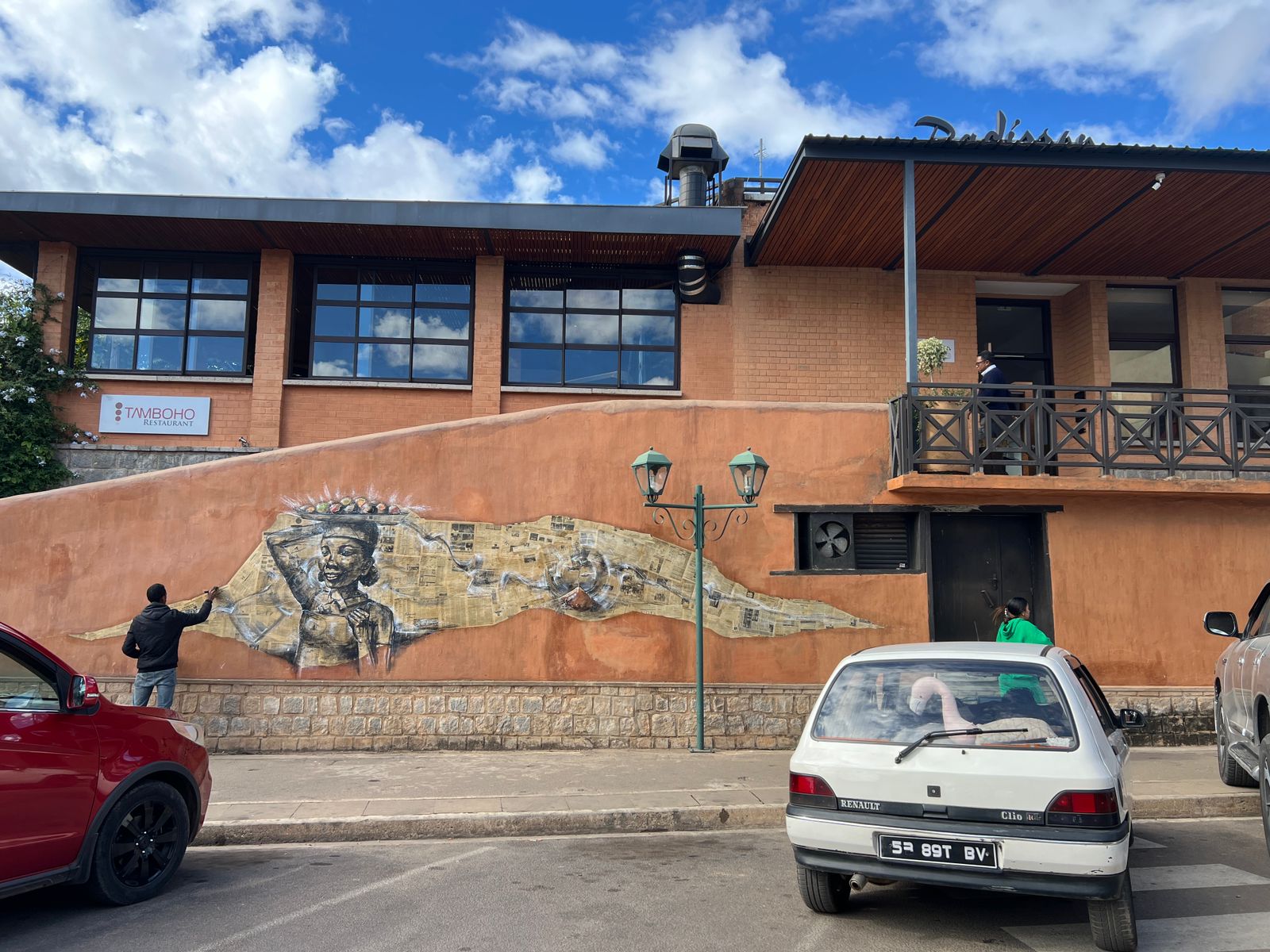
What if the walls in your neighborhood asked you what you eat?
In 20 cities across Africa and Europe, murals are doing exactly that. They are turning schools, markets and community centers into spaces where food, health and justice are no longer abstract policy debates but visible, everyday realities.
Through AfriFOODlinks, artists and communities are using public art to explore how urban food systems shape our lives – and how they can be transformed to better serve people and the planet.
When walls start conversations
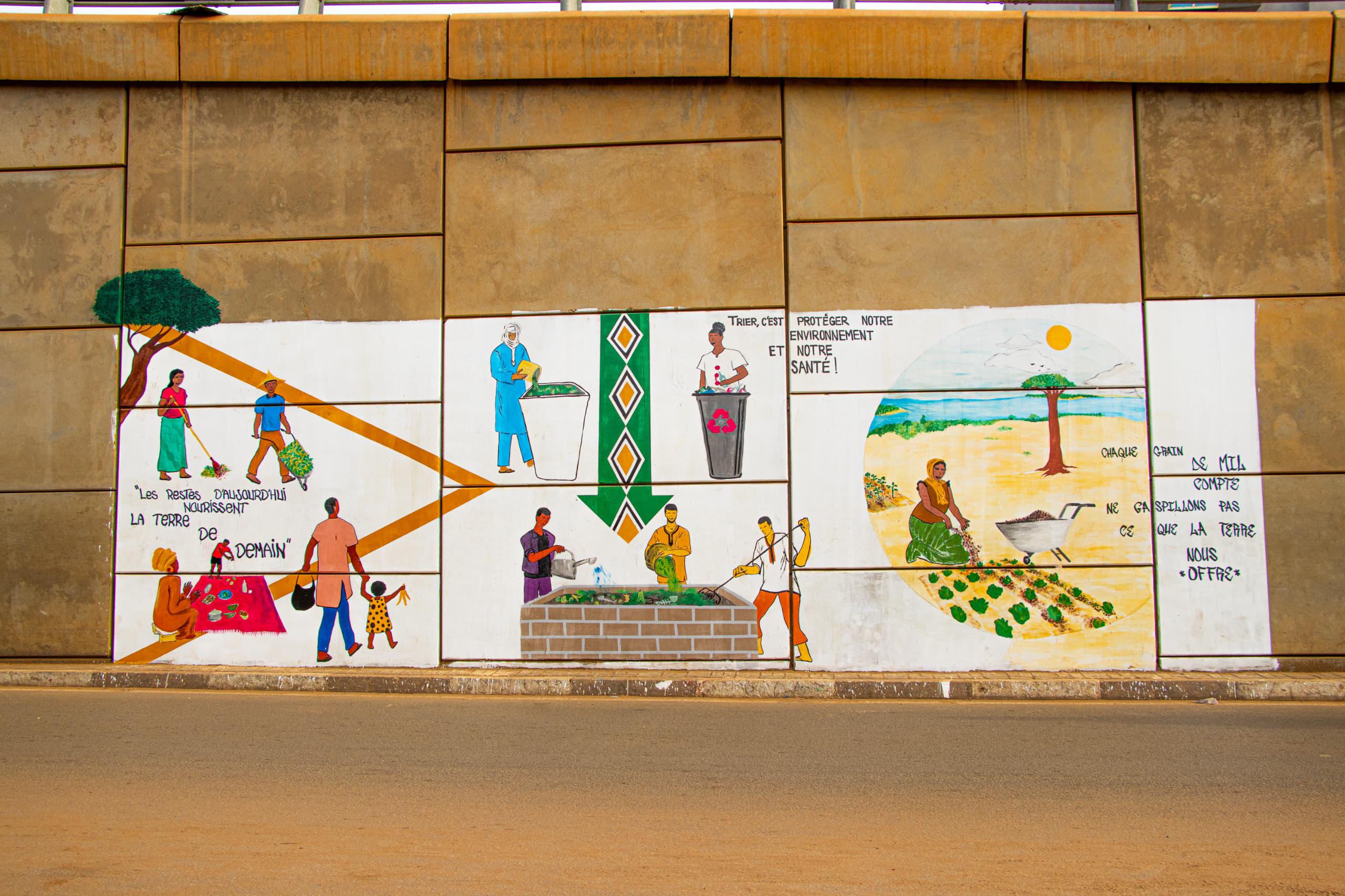
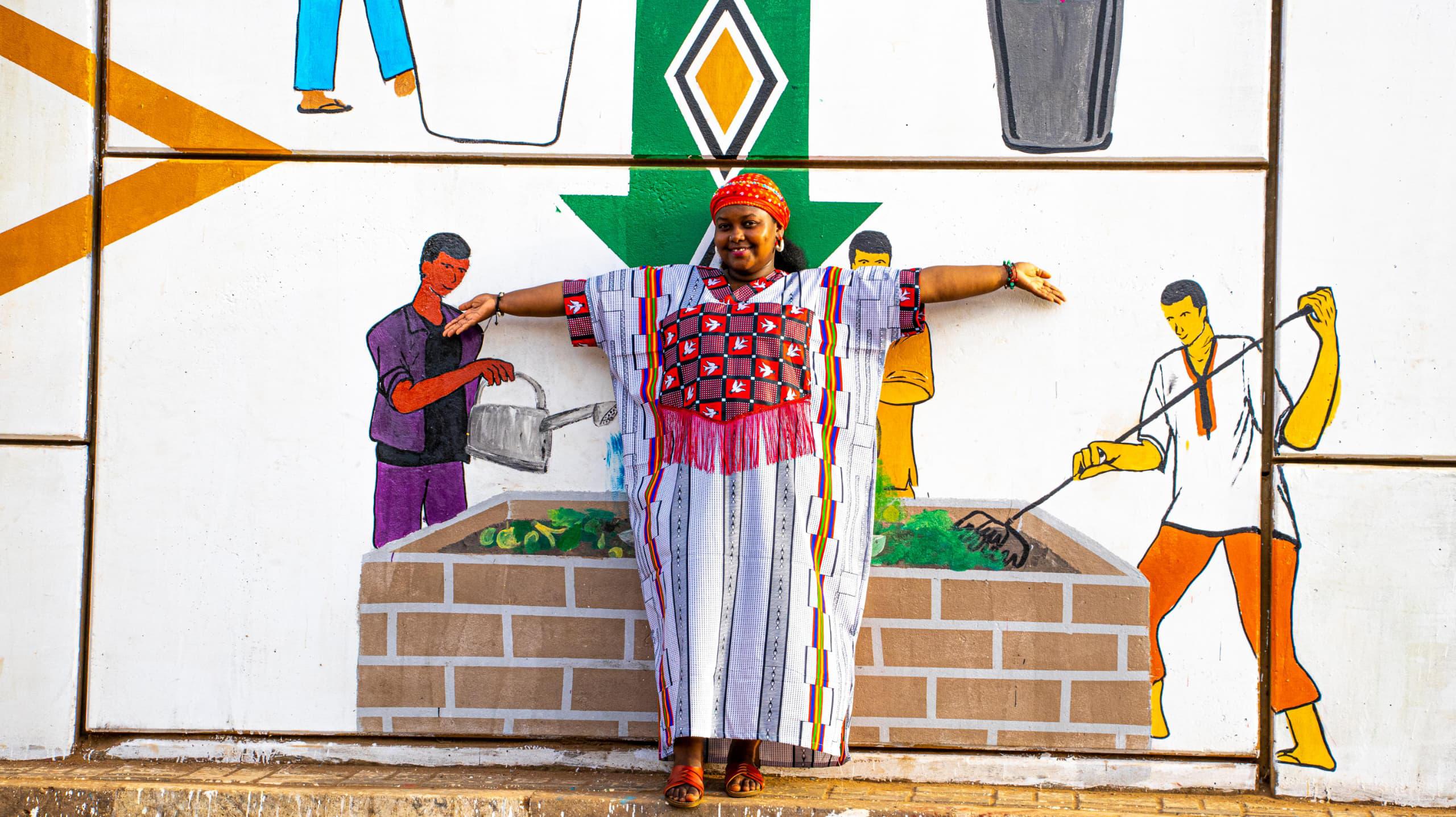
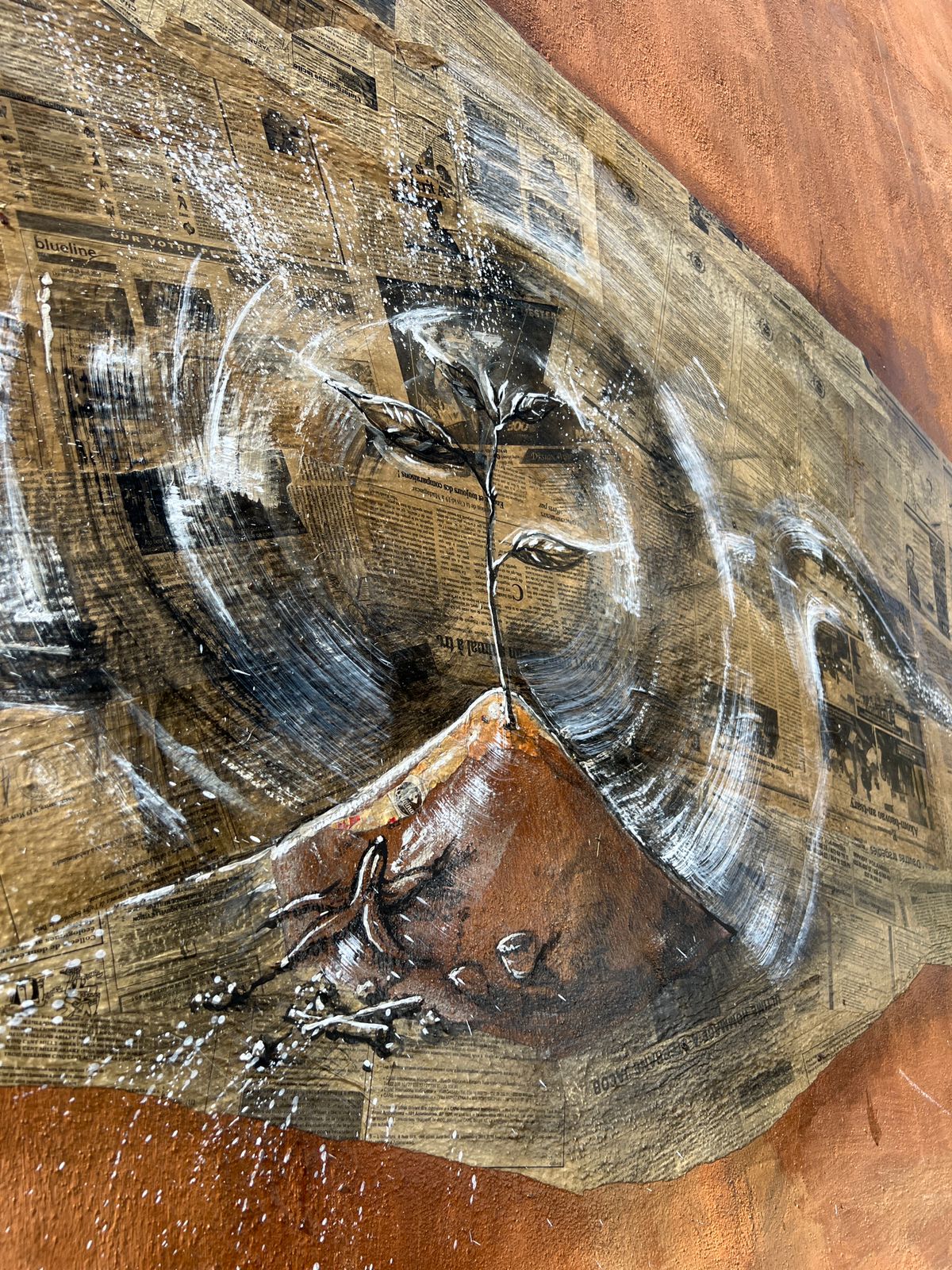
Aiming to make complex food system issues visible and relatable, AfriFOODlinks murals are public invitations to rethink what we eat, how we nourish our communities and how food shapes everyday life in our cities.
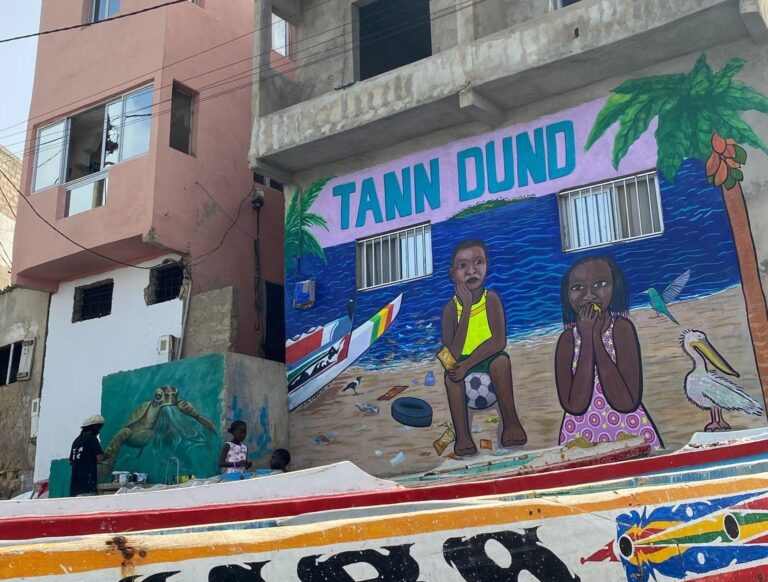
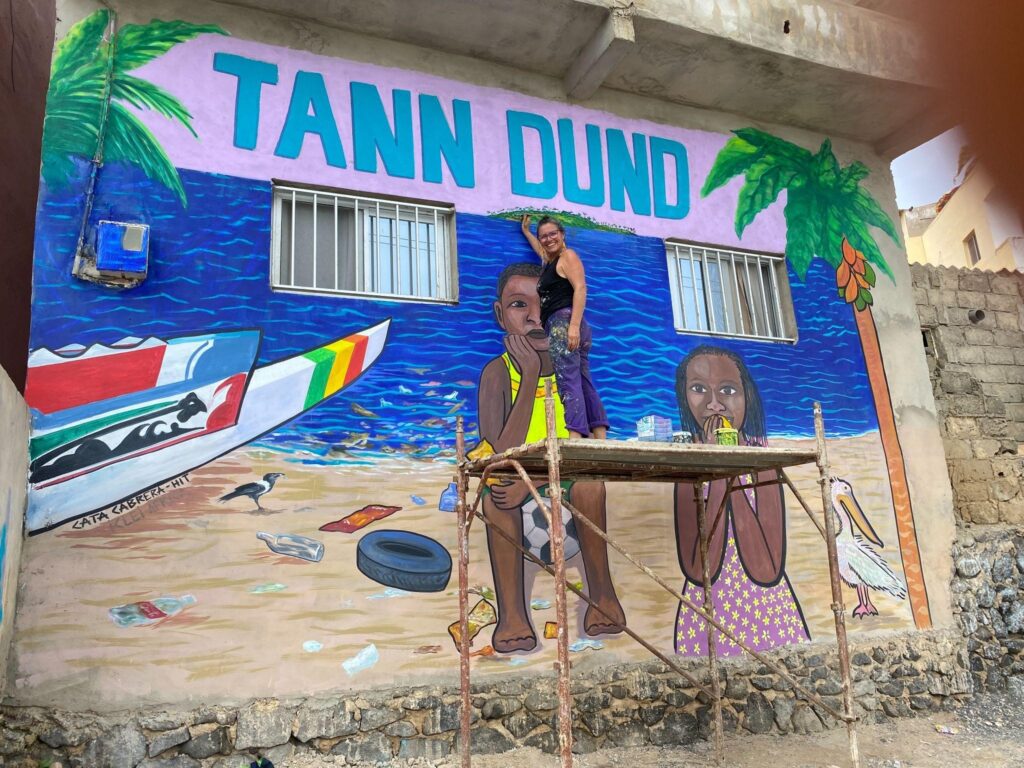
Dakar - Dundu Taan / Je te souhaite une longue vie by Catalina Cabrera
Overlooking the beach in Ngor, a public space frequented by residents and visitors alike, this mural bears a striking visual contrast with an urgent message about the impact of ultra-processed foods and waste. On one side, a boy appearing lethargic sits holding a packet of processed food with waste accumulating around him, much of it linked to the very food he consumes. On the other hand, a young girl stands in a clean, vibrant environment, happily eating what appears to be a locally grown papaya.
The seaside backdrop is intentional. Ngor’s beaches and sea are increasingly contaminated by household waste. The contrast between the two children in this mural highlights the interconnectedness of environmental stewardship and food choices, recognising that the health of people and the planet are deeply intertwined. It raises awareness about the growing challenge of ultra-processed foods, environmental degradation associated with consumption and waste and the preservation of nourishing food systems rooted in local production and environmental care.
The written phrase, “Dundu Taan”, meaning “I wish you a long life”, reinforces the mural’s core message: healthy food systems and healthy environments are foundational to long, thriving lives.
Cape Town - Grow Food, Not War coordinated by HoneyBush Healing Arts Platform
Residents of the Cape Flats in Cape Town – especially children – are often disconnected from healthy, nourishing food due to systemic poverty, limited access to fresh produce, and the normalisation of processed and fast foods. This disconnect affects not only their physical health but also their relationship with the natural world.
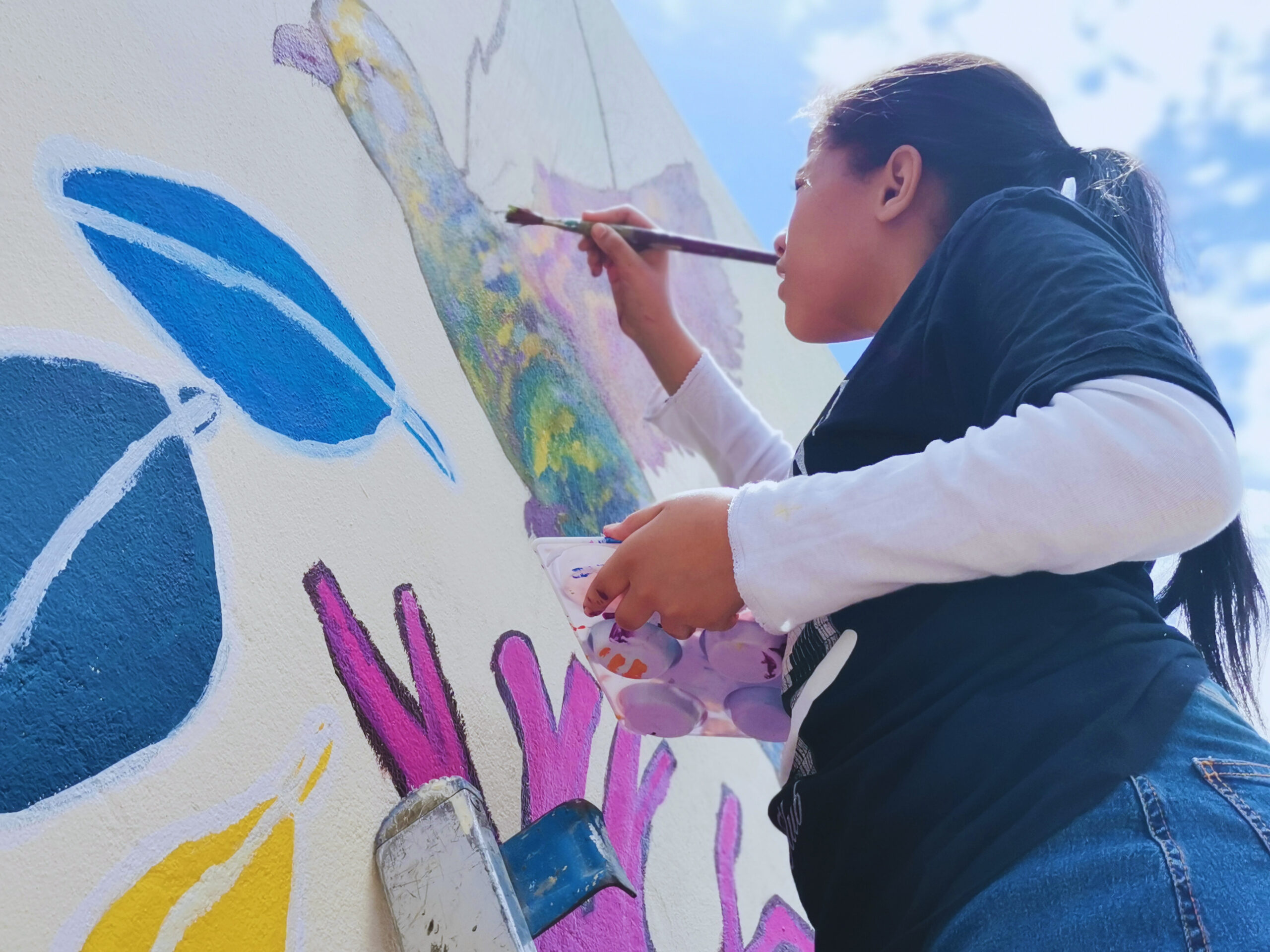
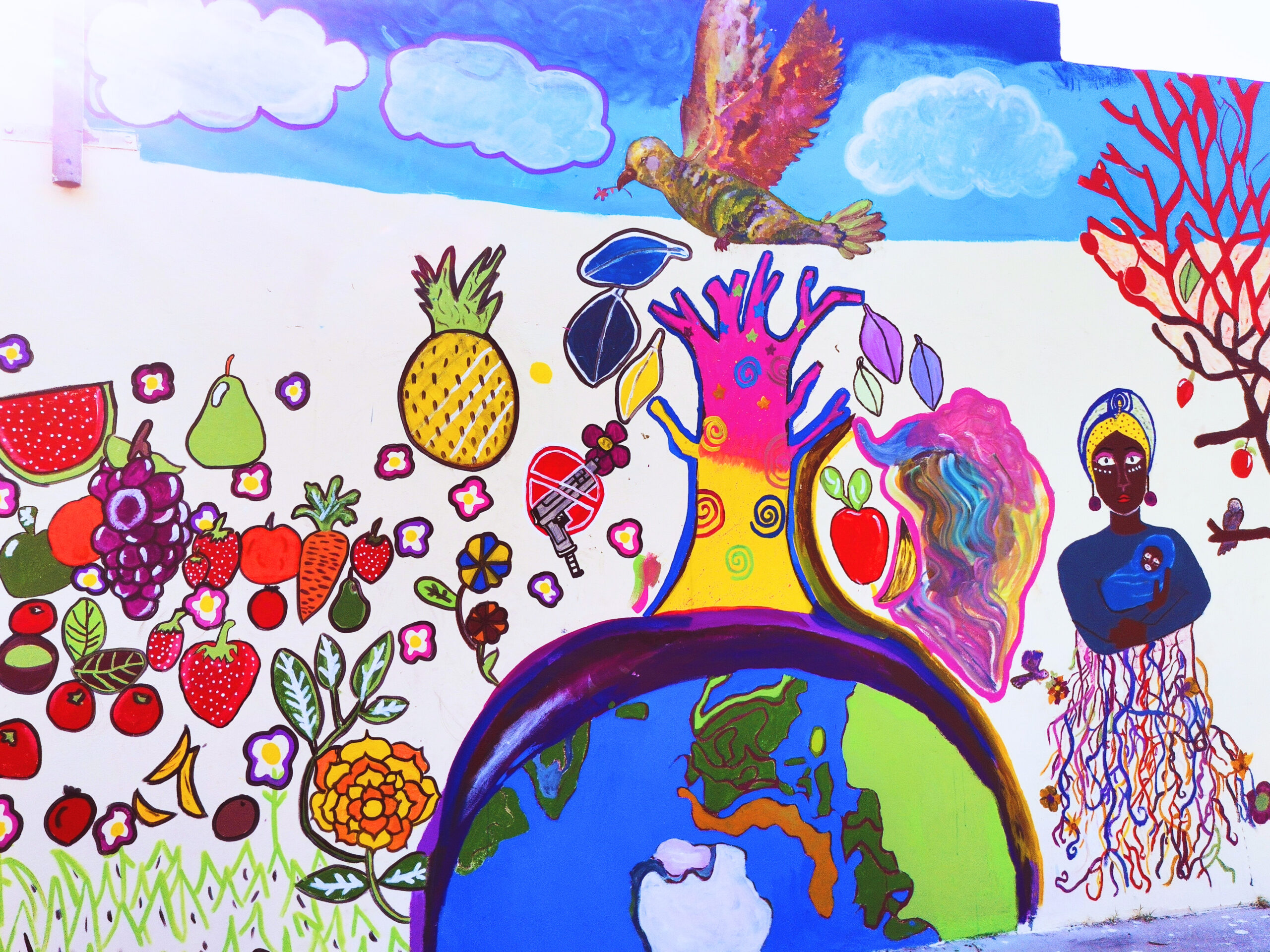
Through the HoneyBush Healing Arts Platform, a mural was painted at AZ Berman Primary School in Beacon Valley to help reconnect children to nature, organic produce and the healing power of the earth, using art as the bridge. The mural also shares a critical message of encouragement, urging young people to choose food sustainability and growing food over engaging in the ongoing gang warfare that has plagued their community.
What makes this mural particularly compelling is the fact that the design process, which culminated in a series of workshops, was structured around and led entirely by children from the school, with support and guidance from SabaZahara HoneyBush, Community Arts Facilitator and Creative Director of HoneyBush Healing Arts Platform. This approach honours their voices, experiences and imaginations, ensuring the message is authentic, relatable and empowering. This powerful youth-led arts intervention promotes food security, peace-building and positive alternatives to gang violence.
In an environment where greenery and gardens are scarce, the image of trees painted by the children further becomes a positive reminder about the importance of nature and green spaces in our cities. The mural is a vision for a healthier, safer future rooted in self-sufficiency and hope. By placing children at the centre of this creative process, the project also highlights the value of participatory approaches in building resilient urban food systems.
Cape Town - SEEDS4peace: Vrygrond by CareCreative
In Vrygrond, an underserved community in Cape Town, a mural was painted opposite the local school at a busy intersection to raise awareness about the power of community-driven food systems. The mural, which is located at the entrance to the Vrygrond Peace Garden, represents resilience, hope and empowerment, illustrating how the garden provides a safe space for youth while cultivating opportunities for learning, employment and community-building.
Using vibrant, culturally relevant symbols and prominently displaying the words “nature”, “nurture” and “nutrition” the mural promotes sustainable food practices, nutrition and healthy living, key themes for future initiatives at the garden. It acts as a visual connector, celebrating the garden’s role in uniting a community often fragmented by socio-economic challenges.
Facilitated by mural artist Claire Homewood (CareCreative) partnering with Amava Oluntu, the mural was created through a participatory process with local schools and community organisations, ensuring it reflects the spirit of Vrygrond and sparks dialogue around food security, zero waste and community empowerment.
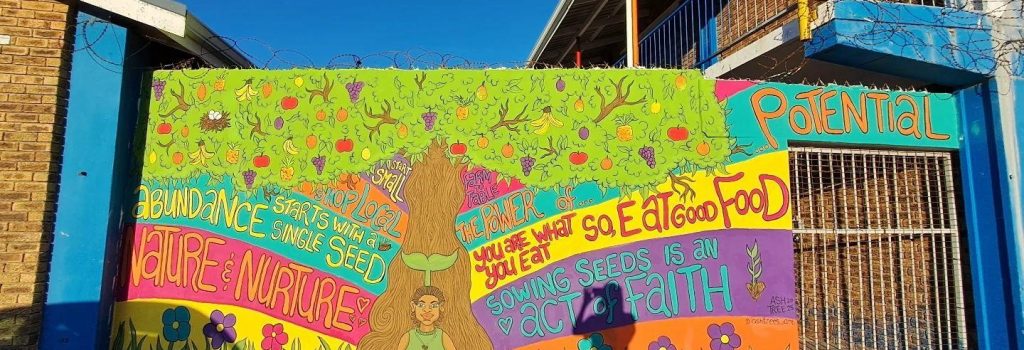
Cape Town - The Power of Potential by Asheigh Bayman and SEED
“The Power of Potential” mural created by artist Ashleigh Bayman, in collaboration with SEED, an organisation in Mitchell’s Plain promoting food security and nutritious diets, highlights how community-driven food systems can nurture growth, opportunity and resilience.It depicts a young girl holding seeds with a large fruit-bearing tree behind her. The tree subtly resembles a mature female form, linking the girl to her greater potential.
As emphasised by Ashleigh in her competition submission, the mural illustrates how a tiny seed, given the right environment, can grow into a strong, fruit-bearing tree. It is a metaphor for the potential within every child, emphasising the role of adults in communities in supporting their growth and, equally, the important role of access to healthy food, nutrition education, holistic lifestyles and natural spaces in empowering young individuals and their communities.
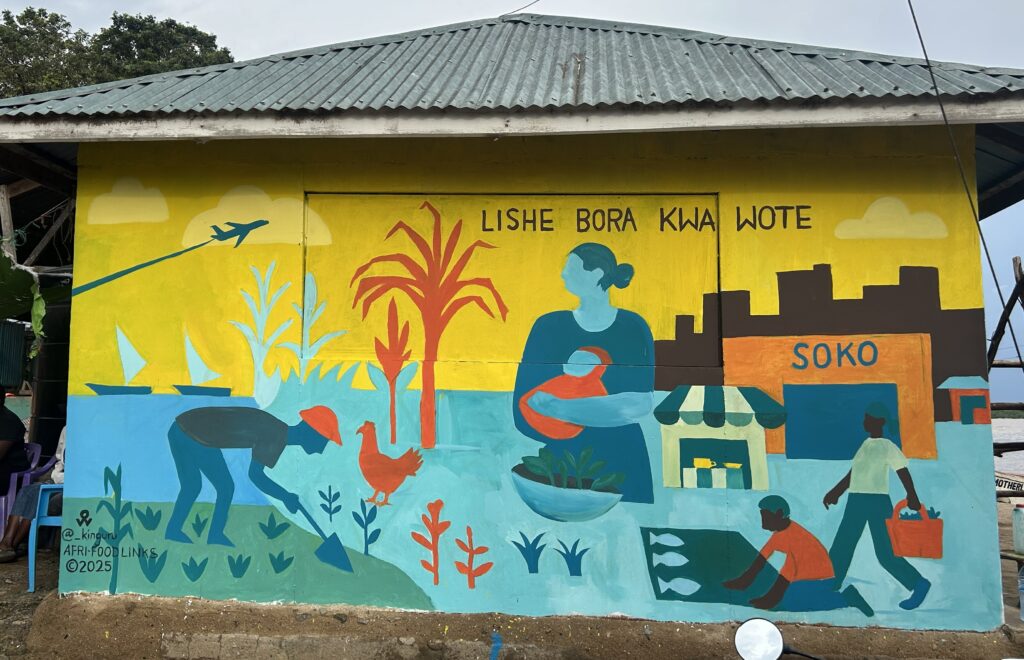
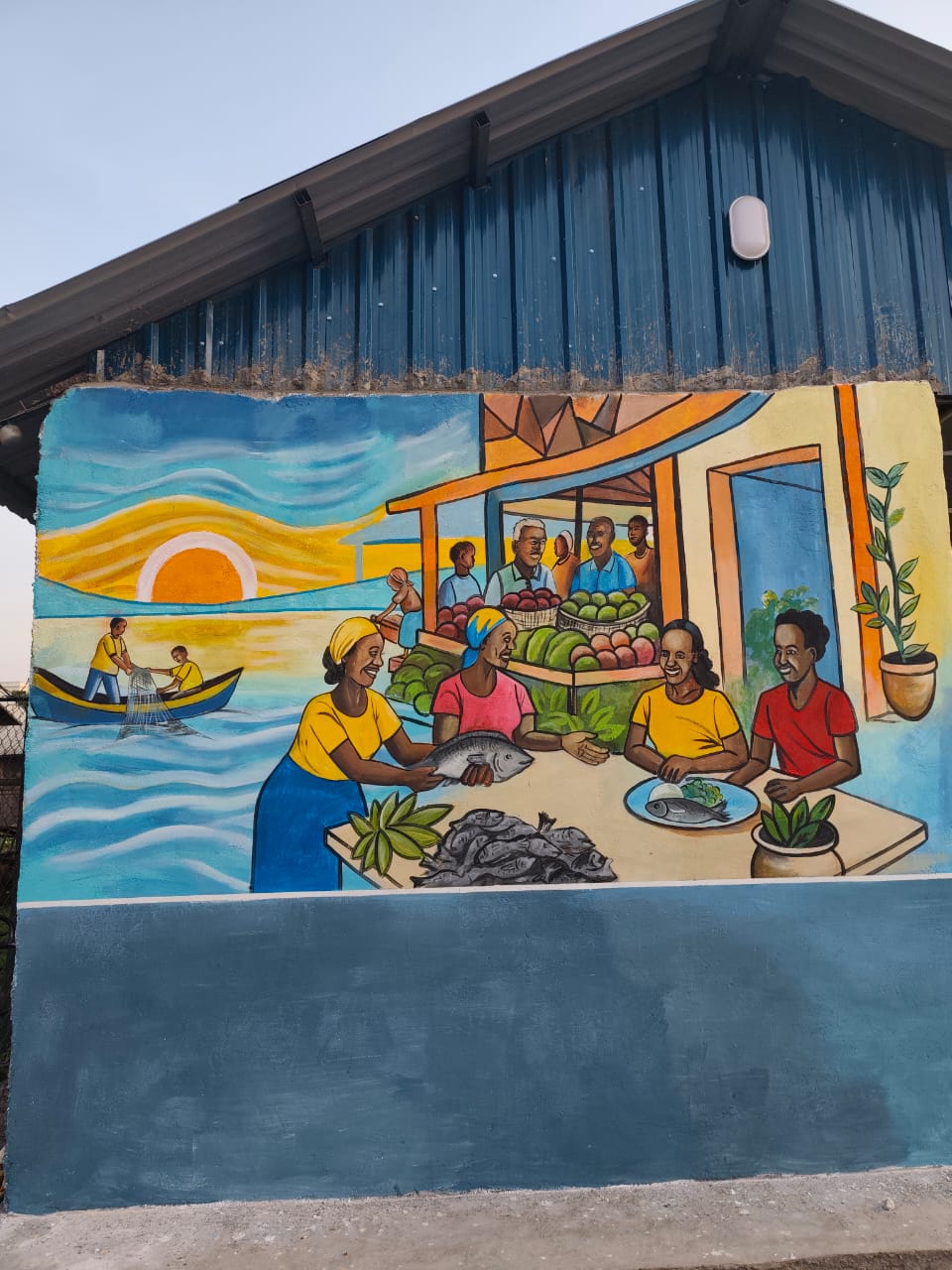
Kisumu - Lishe Bora Kwa Wote by Kinguru Nuru
The Kisumu mural illustrates the city’s food system from farm to market. Rice, sugarcane, maize and small-scale farms appear alongside boats on Lake Victoria, while a mother with a bowl of greens highlights the need for better nutrition for women and children. The hawkers, a shack selling tea and mandazi (a type of East African doughnut), and the supermarket depicted, represent the retail sector, reflecting how different communities access food.
The mural, located at the Dunga Eco Craft Community Shop on Dunga Beach, next to the fish market in Kisumu and near the lake, features the Swahili phrase “lishe bora ka wote,” meaning “nutrition for all”. This message reinforces the mural’s focus on equitable access to healthy food and connects viewers to Kisumu’s local food production, markets and nutrition opportunities.
From art to action
Through strategic placements, clear messaging, locally relevant symbols and community involvement in design and installation processes, these striking murals tell stories that draw attention to issues of food justice, equity, food waste and child nutrition in underserved communities. Youth ambassadors and project partners have already brought art with impactful messages to life in schools, community gardens, markets and other public spaces, sparking conversation around food systems in more accessible formats to a wider audience.
With more murals planned across other cities for 2026, we look forward to seeing communities engaged, local voices celebrated, and public spaces transformed into platforms for learning, culture, and sustainable urban food futures. Explore some of the youth-led murals here.
Murals facilitated by AfriFOODlinks Youth Ambassadors